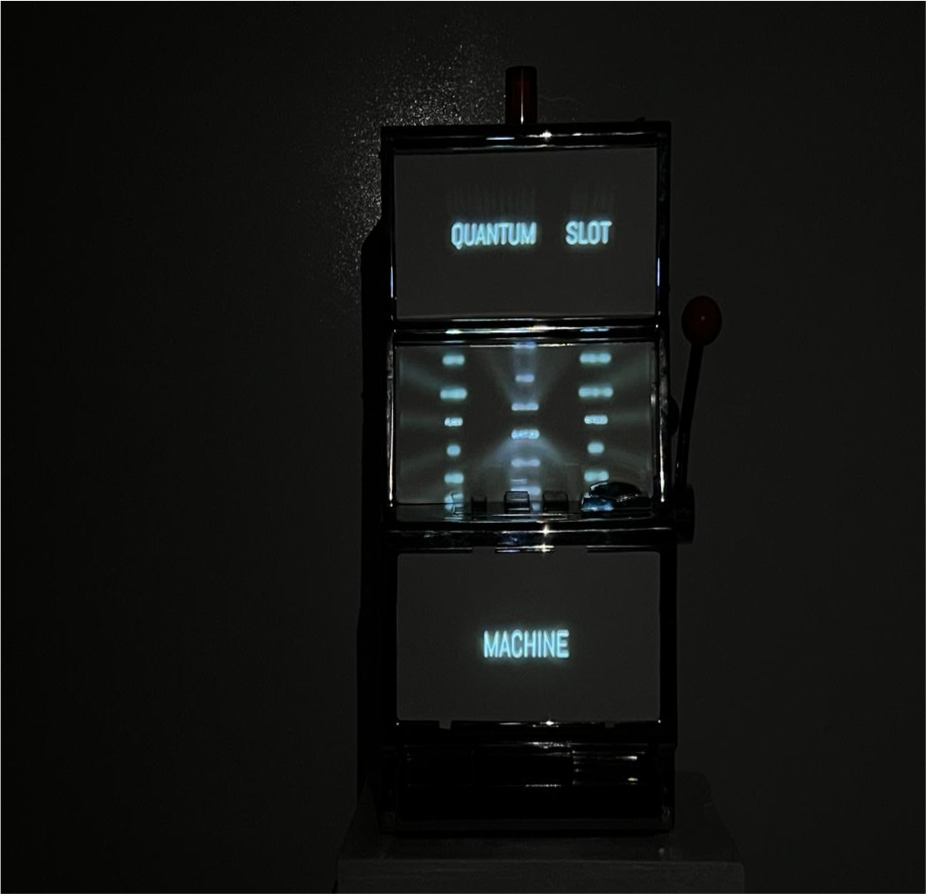
A classic slot machine is not random. Its reels are driven by a pseudorandom number generator — a deterministic algorithm that only looks unpredictable. Given the same seed, it produces the same sequence every time. We wanted to build a machine whose randomness was genuinely irreducible. We found one on eBay for $40.
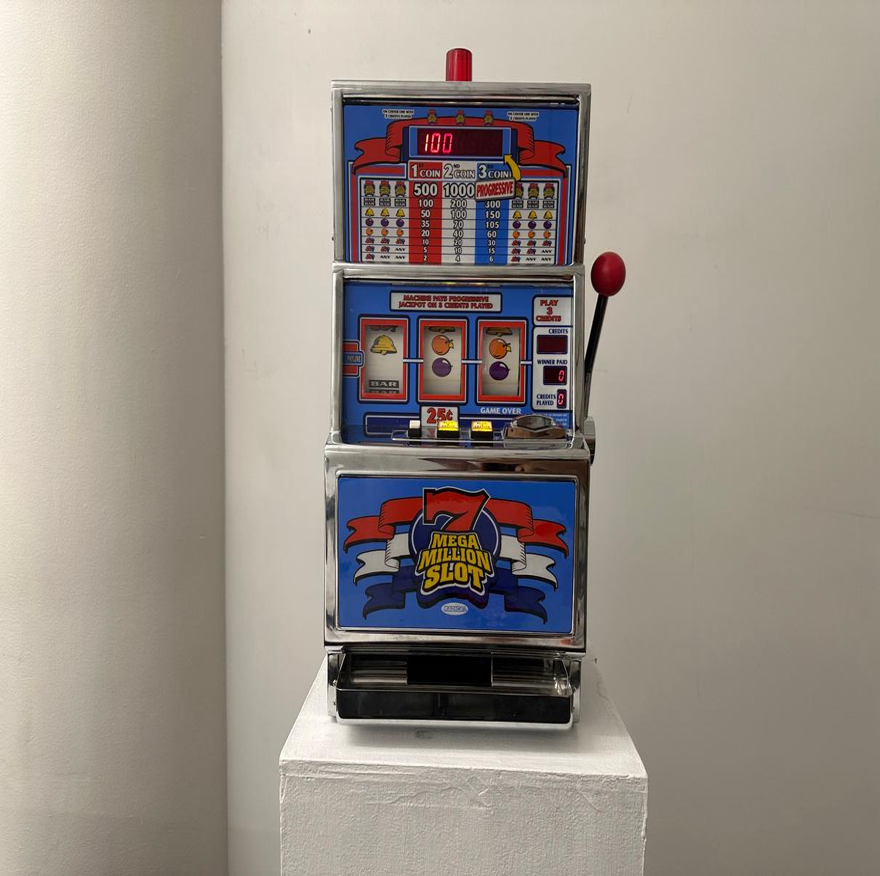
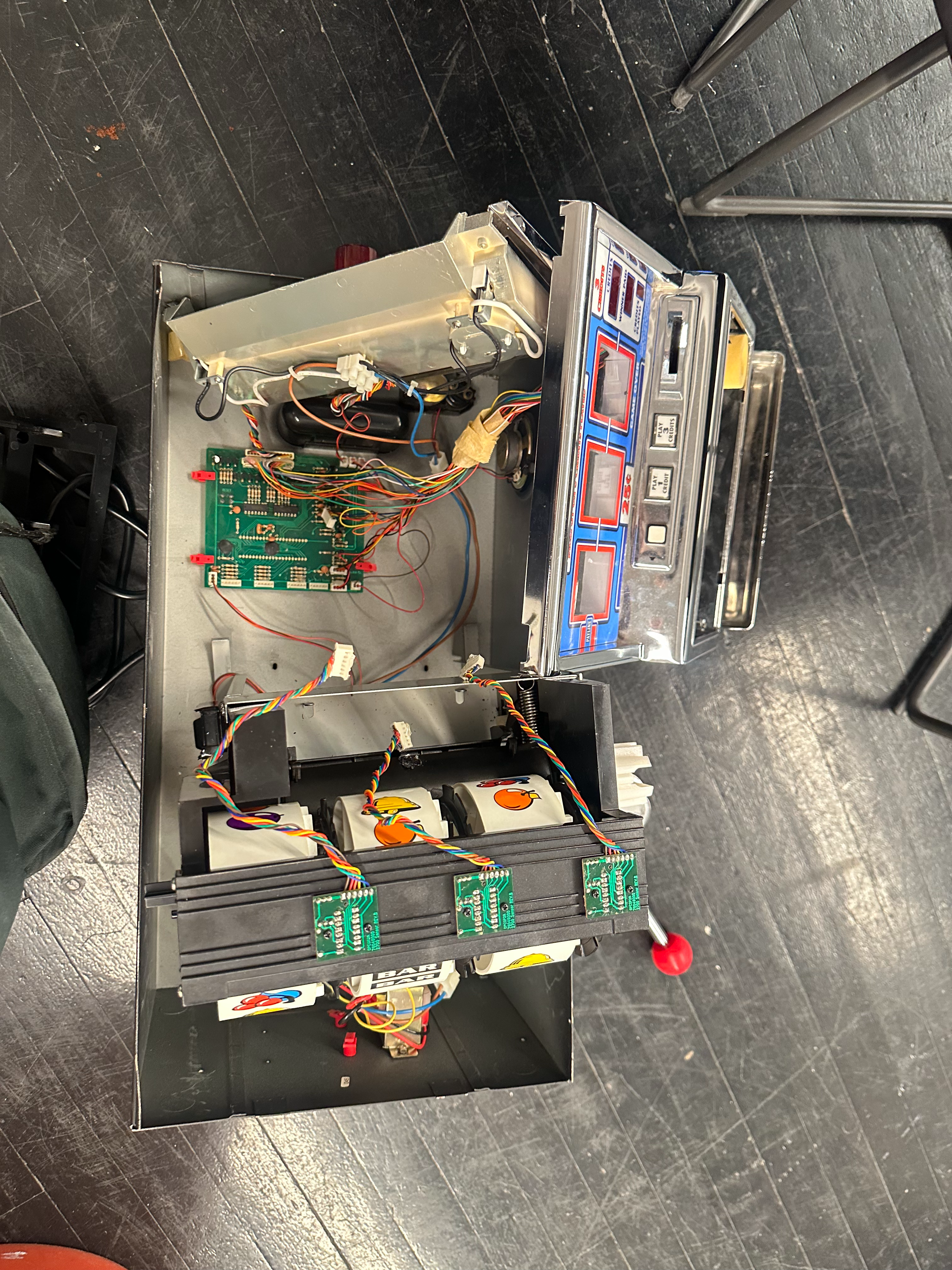
Every random number your computer generates is actually computed from a seed — a starting value. The algorithm is deterministic: same seed, same output. This is called pseudorandomness, and it's good enough for games, simulations, and encryption. But it isn't truly random. Somewhere, a hidden variable determines the outcome before you ever pull the lever. The question this project asks: what if we replaced that algorithm with something the universe itself cannot predict?
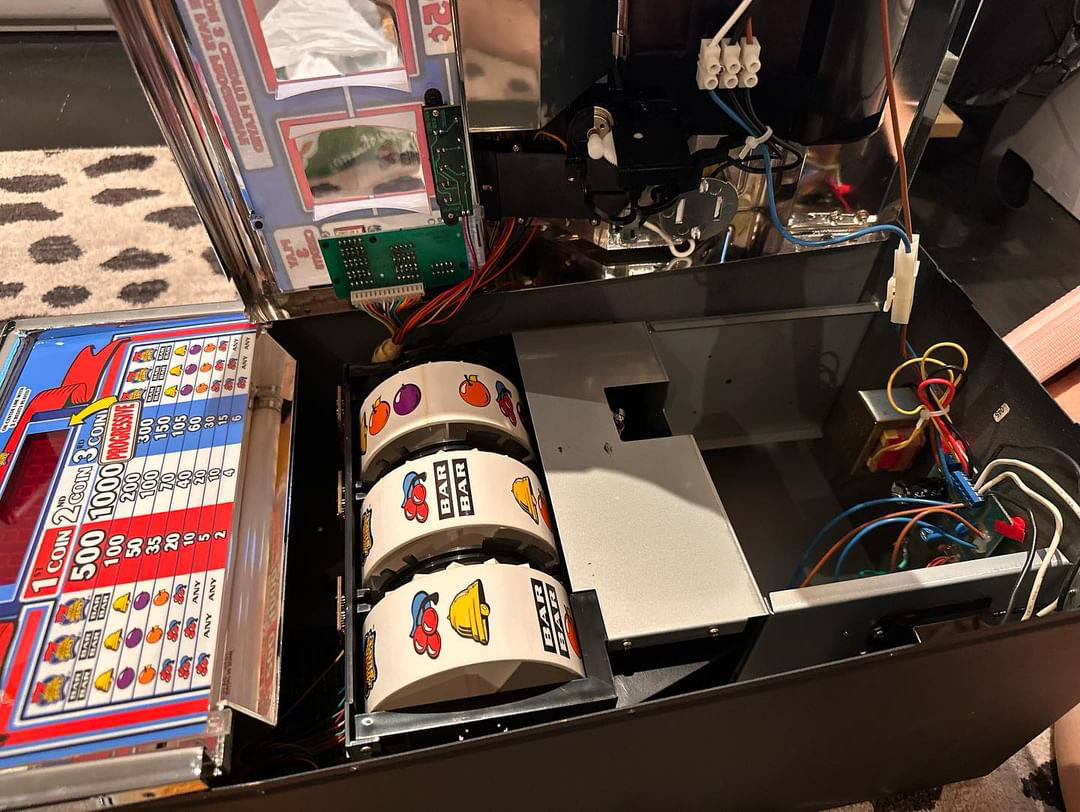

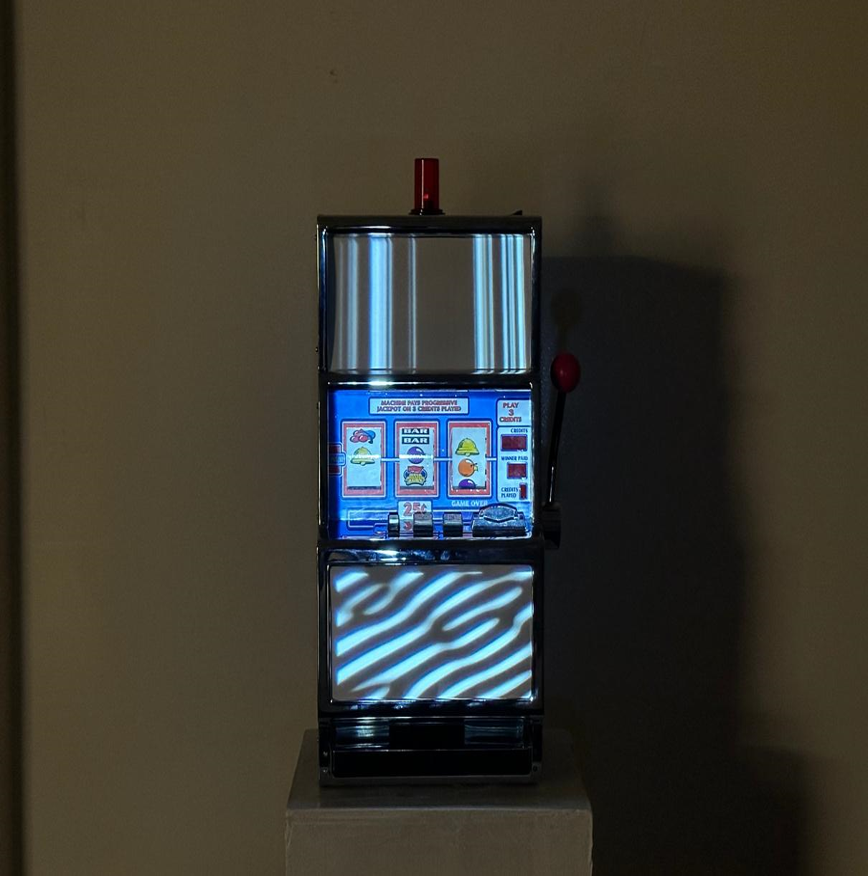
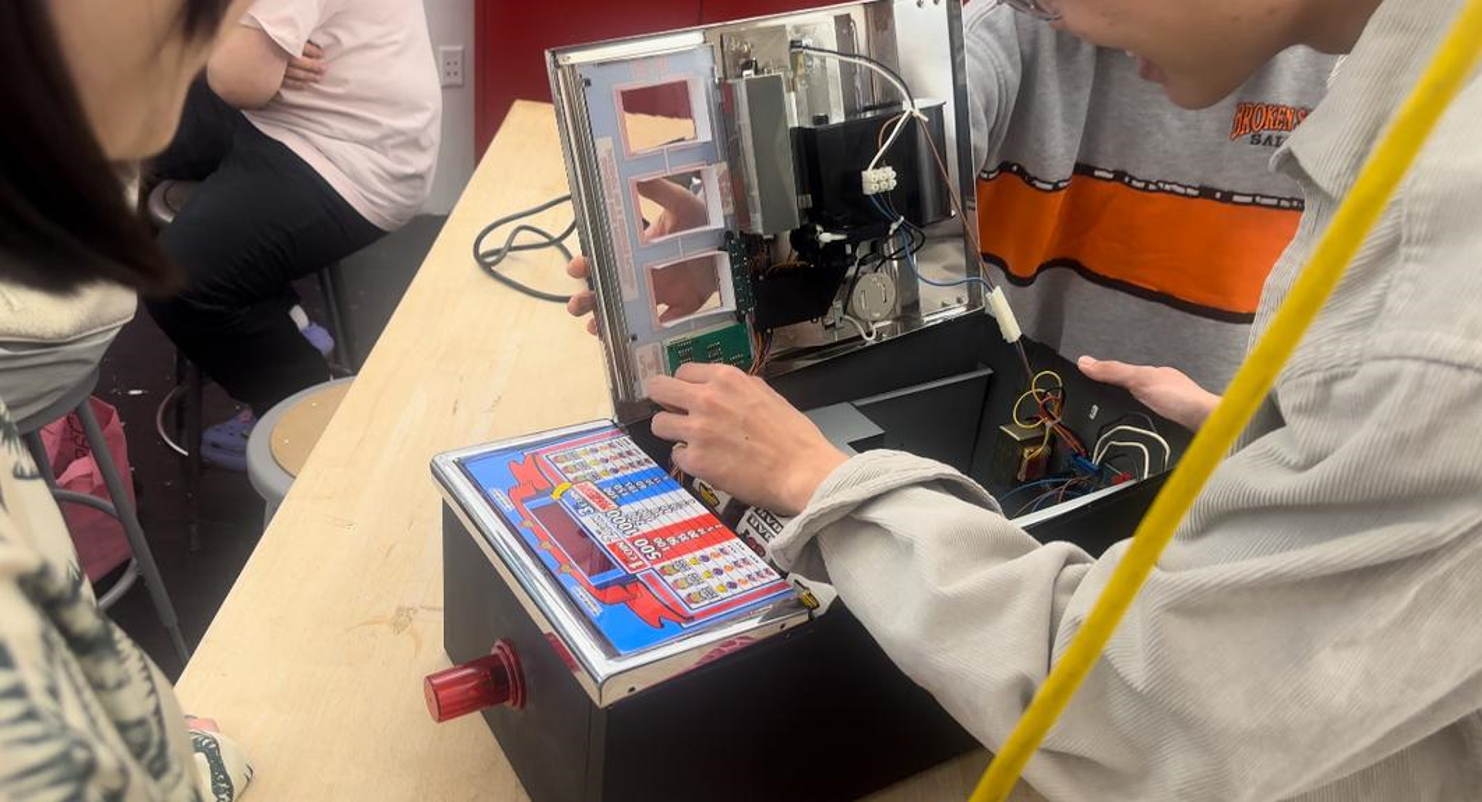
The original coin acceptor was rewired as a trigger input. The mechanical reels — each a physical object that can only be in one position at a time — were removed entirely. Their replacement is a projection surface. The results are computed, not mechanical. And the computation happens on a quantum circuit.
A classical bit is a switch: definitively 0 or definitively 1. A qubit is a quantum system — a single particle, an electron spin, a photon — that obeys quantum mechanics instead of classical logic. Its state isn't a fixed value. It's a vector in a two-dimensional space, pointing somewhere between |0⟩ and |1⟩. Until you measure it, both outcomes are simultaneously possible. This isn't imprecision. The qubit genuinely has no single value — the universe hasn't decided yet.
A qubit in superposition holds 0 and 1 at the same time — not as probabilities you haven't looked at yet, but as a real physical coexistence of states. With 10 qubits all in superposition, there are 210 = 1,024 possible outcomes, all existing at once. In this machine, before the lever drops, every combination of scientist, verb, and topic is simultaneously "spinning." None of them is more real than any other. The physical reels had to come out precisely because a physical reel can only be in one place at a time.

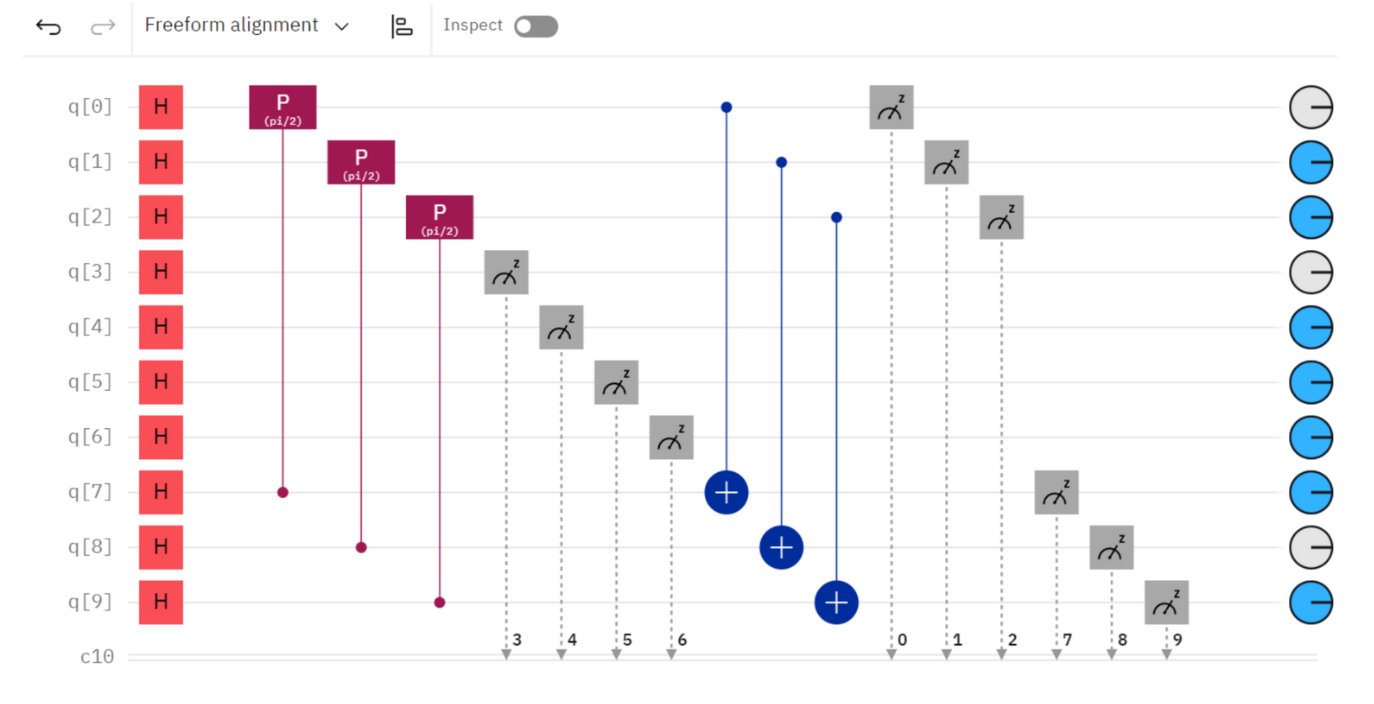
A quantum circuit is a sequence of operations applied to qubits, written left to right like a musical score. Each horizontal line is a qubit wire. Each box is a gate — an operation that changes the qubit's state. The circuit always ends with measurement, which collapses every qubit to a definite 0 or 1. Our circuit has three stages: (1) Hadamard gates put all 10 qubits into superposition. (2) Entangling gates (CP and CNOT) create correlations between the scientist and topic reels. (3) Measurement reads out the final 10-bit string.


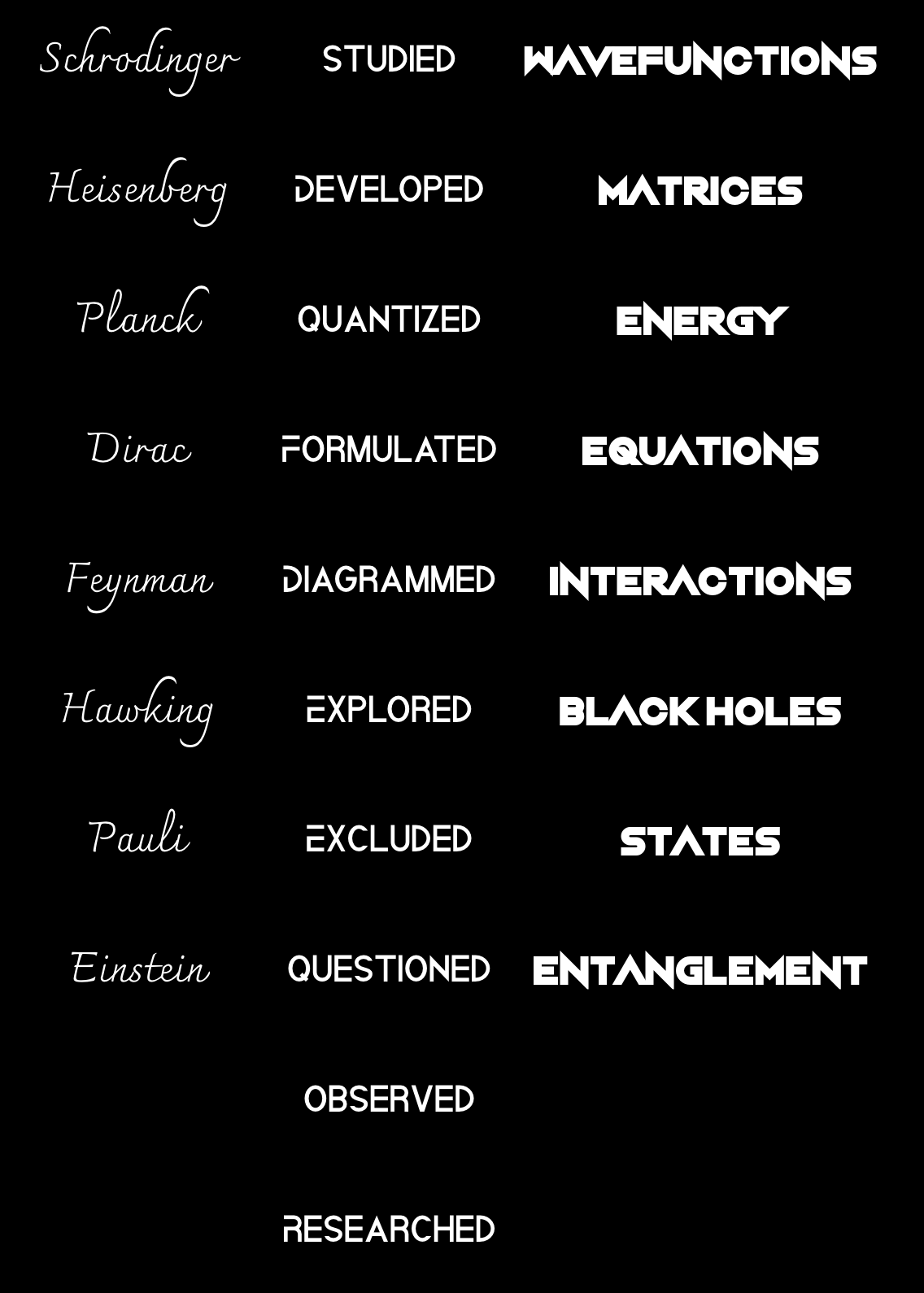
The 10 qubits are split into three groups: qubits 0–2 encode the scientist (3 bits = 8 possible names), qubits 3–6 encode the verb (4 bits = 10 options), and qubits 7–9 encode the topic (3 bits = 8 subjects). Every combination has equal probability — unless the qubits are entangled.
| Bits | Group | Word |
|---|
Measurement is the moment superposition ends. When you measure a qubit, its wave function collapses — the continuous range of possible states snaps to a single definite value, 0 or 1. This is irreversible. The 10 bits produced by our circuit are split 3+4+3, and each group is used as an index into its word list. The circuit runs on IBM's Qasm simulator with a depolarizing noise model — a layer of controlled error that replicates the imprecision of real quantum hardware.
Two qubits are entangled when measuring one instantly determines the other — regardless of distance. In this circuit, CP (controlled-phase) gates create correlations between the scientist qubits (q0–q2) and the topic qubits (q7–q9). They are no longer independent coin flips. When the scientist reel collapses to EINSTEIN, the probability distribution of the topic reel shifts. The two reels are quantum-correlated. Einstein himself called this "spooky action at a distance" — and spent years trying to prove it couldn't be real. The experiments proved him wrong.
Click to animate — H gates → entanglement → measurement → 10-bit output

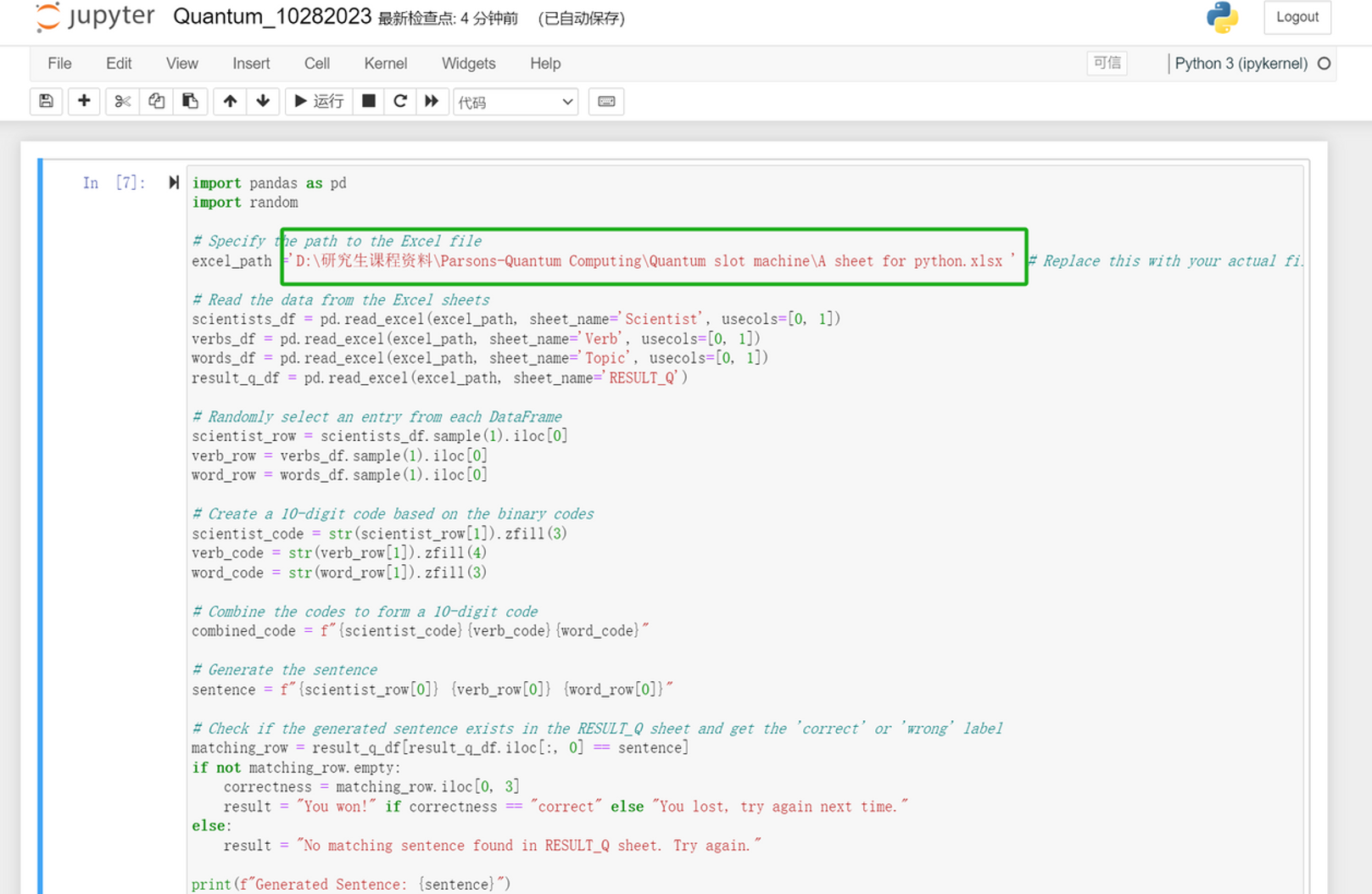
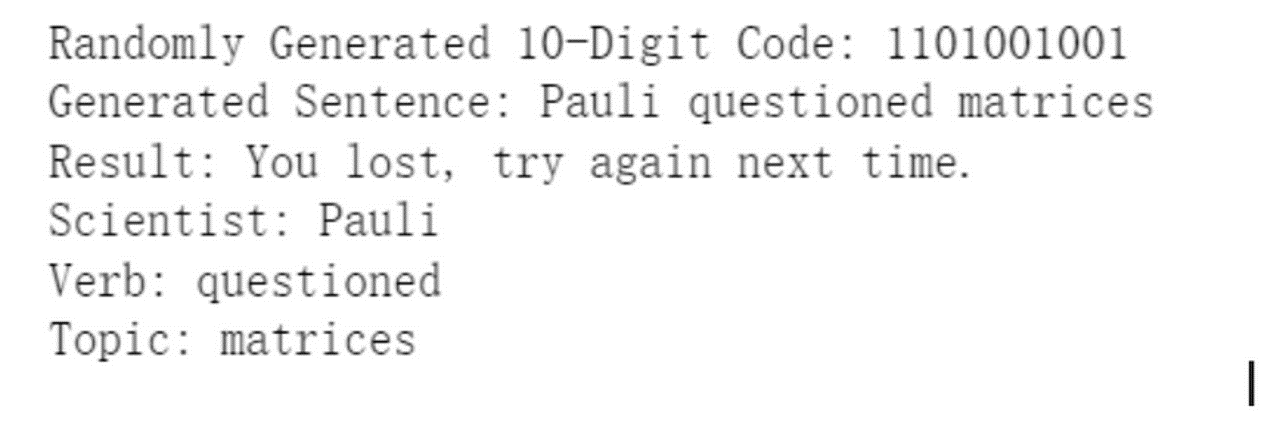
The 10-bit measurement string is split into three chunks — 3 bits for scientist, 4 for verb, 3 for topic. Each chunk is an integer index into its word list. The complete dictionary contains 8 × 10 × 8 = 640 possible sentences. About 60 of them are historically accurate statements — those are wins. The rest is nonsense. The machine doesn't know the difference until the circuit runs.
A classical random number generator always has a hidden variable: the seed. Given the same seed, it produces the same output. In principle, a deterministic system running the same algorithm from the same starting state will always produce the same result. Quantum measurement has no hidden variable. Bell's theorem (1964) and subsequent experiments prove this mathematically: no local hidden variable theory can reproduce the statistics of quantum measurements. When this machine's circuit runs, the outcome is not merely unknown — it is undetermined. The universe itself hasn't decided. Every pull produces a result that has never existed before and can never be replicated.


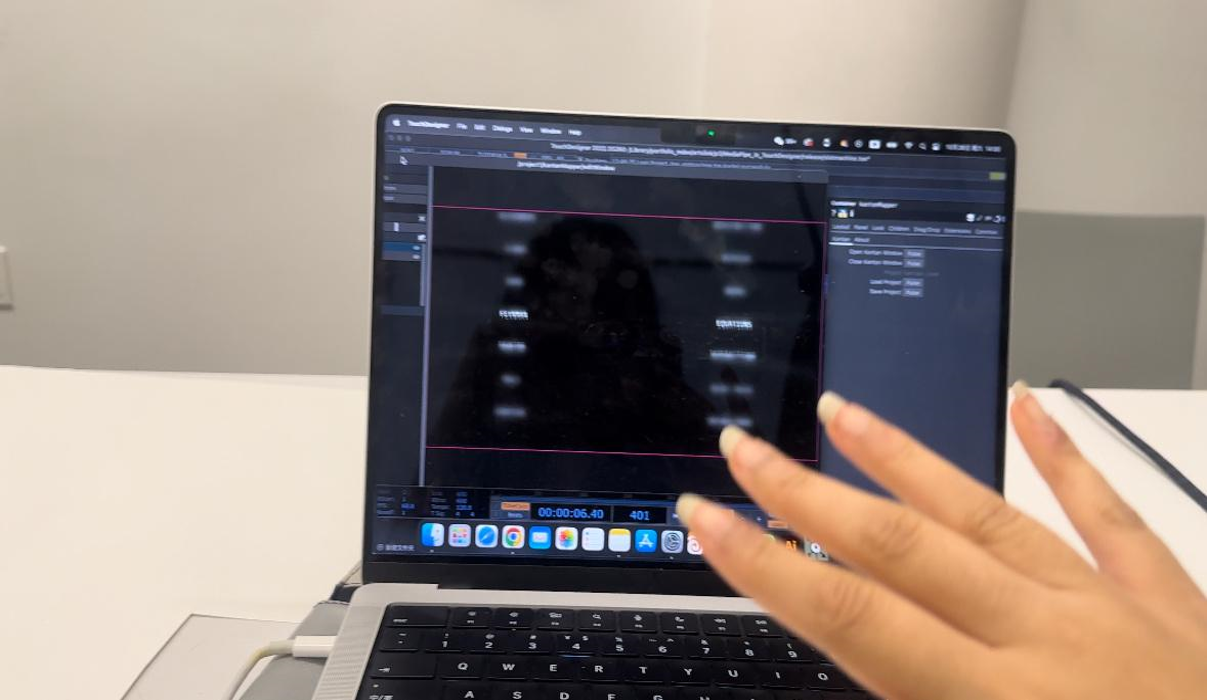
There is no lever. A wave of the hand replaces it. MediaPipe tracks 21 hand landmarks in real time; a gesture classifier recognises the pulling motion and fires a quantum circuit execution. The result — a 10-bit measurement string collapsed from superposition — is projected back onto the machine's face.
In quantum mechanics, measurement is not passive. The act of observing a quantum system forces it to choose. Before you look, the system is genuinely undecided — a superposition of all possibilities. The moment you interact with it, the wave function collapses and one outcome becomes real. In this installation, the observer's gesture is the measurement. The hand wave doesn't trigger randomness — it triggers the collapse of a quantum state that was, until that moment, everywhere at once. You reach out — and the universe decides.
The New School / IBM Quantum Design Jam — 2023
Special Thanks
Dr. Paul Kassebaum, Physicist, IBM Quantum
Leffin Christopher, Futurist + Artist, The New School
Maya Georgieva, Futurist + Technologist, The New School
Sven Travis, Professor of Media & Quantum Design, The New School
In Collaboration With
Sanyukta Bhonsle
Jin TianJi
Qian Xiang
Amelia Dodson
Sebastian Guerrero